Rosa Parks Quotes That Shaped Courage, Justice, and Change
Rosa Parks is often remembered for a single moment, refusing to give up her seat on a Montgomery bus in 1955. Yet her true legacy runs far deeper. Her words, spoken and written across decades of quiet resistance, offer rare insight into moral courage, dignity, and the power of steady resolve. Rosa Parks quotes are not dramatic slogans created for applause. They are thoughtful reflections shaped by lived experience, faith, fear, and unwavering belief in human dignity.
People searching for these quotes are usually looking for more than inspiration. They want context, meaning, and authenticity. They want to understand what Rosa Parks actually believed, how she viewed justice, and why her words still resonate today. This article explores her most meaningful quotes in depth, explaining their historical background, practical lessons, and relevance in modern life. Rather than listing lines without meaning, this guide helps readers understand why these words matter and how they continue to guide conversations about equality and civil responsibility.
Who Rosa Parks Was Beyond the Headlines
Rosa Louise McCauley Parks was not an accidental hero. Long before her arrest in Montgomery, she was deeply involved in civil rights work. She served as secretary of the local NAACP chapter, documented cases of racial injustice, and attended training at the Highlander Folk School. Her activism was deliberate and informed.
Understanding her quotes requires understanding her mindset. She was soft spoken but firm. She disliked being called tired on that bus because her refusal was not about physical exhaustion. It was about moral exhaustion from injustice. Her words reflect discipline, restraint, and deep ethical clarity.
When reading Rosa Parks quotes, it is important to see them as part of a lifelong commitment to justice, not as isolated moments of bravery.
Why Rosa Parks Quotes Still Matter Today
Words shape movements. Rosa Parks did not seek attention, but her statements helped define the moral language of the civil rights era. Today, her quotes continue to be used in classrooms, leadership training, community organizing, and personal reflection.
They matter for several reasons:
- They are grounded in real sacrifice, not theory.
- They show courage without aggression.
- They highlight dignity as a form of resistance.
- They remind readers that change often begins quietly.
In a time of constant noise and performative activism, her calm and measured words feel especially powerful.
Core Themes Found in Rosa Parks Quotes
Courage Without Hatred
One striking aspect of her language is the absence of bitterness. She spoke about injustice clearly, yet without dehumanizing others. Her courage was rooted in self respect, not anger.
This teaches a valuable lesson. Resistance does not require cruelty. Moral clarity can exist alongside compassion.
Quiet Strength and Inner Resolve
Rosa Parks never framed herself as fearless. Instead, she often acknowledged fear while choosing to act anyway. Her quotes reveal that bravery is not the absence of fear but the decision to move forward despite it.
Faith and Moral Conviction
Her words often reference faith, not in a preachy way, but as a grounding force. She believed that justice aligned with a higher moral order, which gave her strength during difficult times.
Responsibility of Ordinary People
Many of her statements emphasize that social change is not reserved for leaders alone. She believed ordinary people have a duty to stand for what is right, even in small ways.
The Most Meaningful Rosa Parks Quotes Explained
Rather than listing dozens of lines, this section explores some of her most impactful quotes and explains their deeper meaning.
“I would like to be remembered as a person who wanted to be free.”
This quote reflects her desire for dignity over fame. She did not see herself as a symbol. She saw herself as a human being asserting a basic right.
The word free here is crucial. It is not only about physical movement or legal status. It includes freedom from humiliation, fear, and imposed inferiority.
The lesson is simple yet profound. True freedom begins with self recognition.
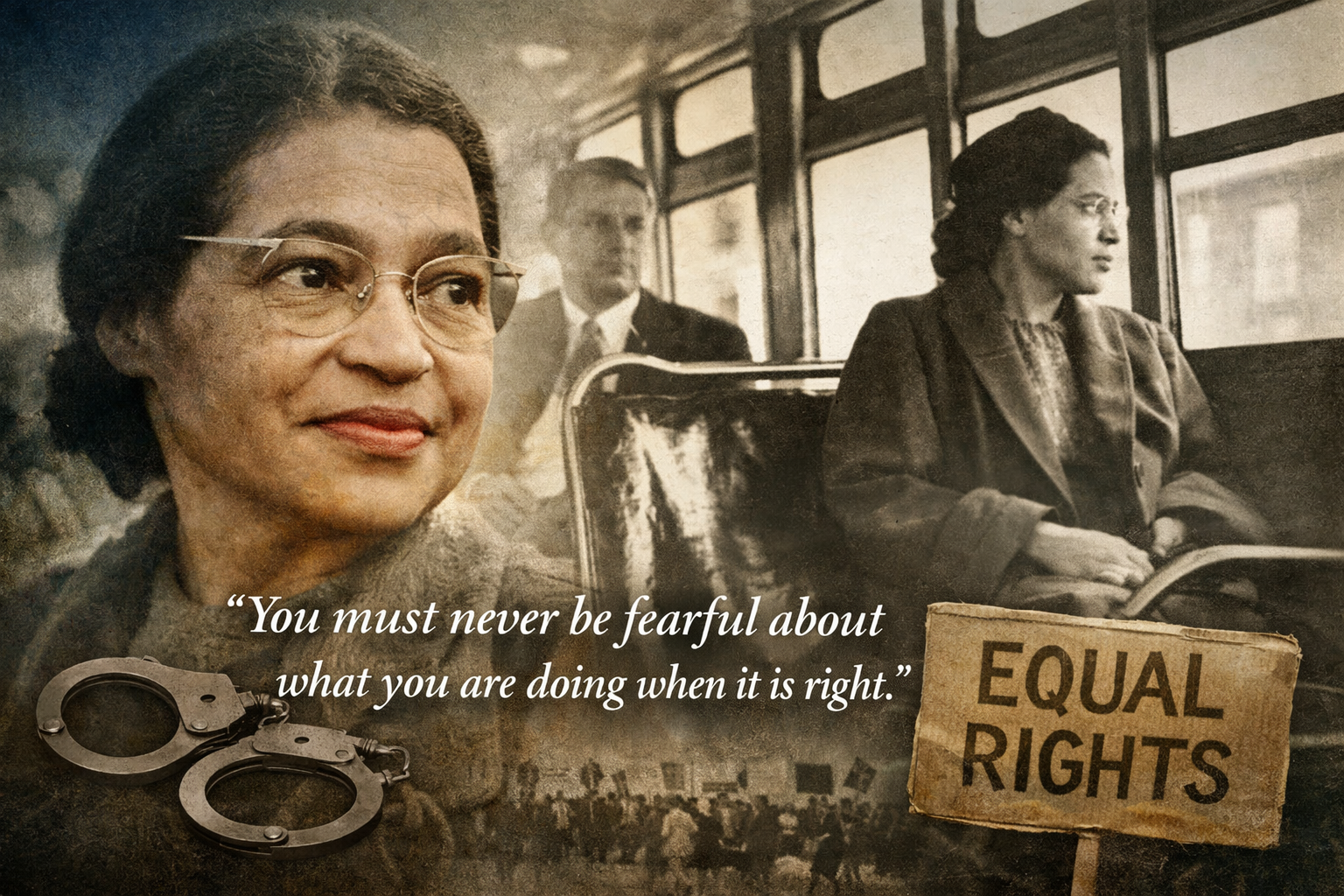
“You must never be fearful about what you are doing when it is right.”
This statement captures her moral philosophy. Fear is natural, but it should not dictate action when ethics are clear.
In modern contexts, this applies to whistleblowers, advocates, and everyday people facing unfair systems. Her words encourage thoughtful courage, not reckless defiance.
“Stand for something or you will fall for anything.”
This quote is often repeated, but its meaning is deeper than motivation. She believed that values must be actively chosen and defended.
Standing for something requires reflection, consistency, and sometimes discomfort. Her life demonstrated that principle long before it became a popular saying.
“Each person must live their life as a model for others.”
This reflects her belief in personal responsibility. She did not wait for perfect conditions or unanimous support. She believed individual behavior shapes collective standards.
In practice, this means living with integrity even when no one is watching.
How Rosa Parks Quotes Reflect Real World Experience
Rosa Parks did not speak in abstractions. Her words were shaped by:
- Encounters with segregation laws.
- Threats to her safety.
- Economic hardship after her arrest.
- Years of quiet organizing.
This lived experience gives her quotes credibility. They are not idealistic fantasies. They are reflections from someone who paid a real price for standing firm.
When she spoke about fear, she knew it intimately. When she spoke about dignity, she had fought to preserve it under pressure.
Educational Value of Rosa Parks Quotes
Teachers often use her quotes to introduce students to civil rights history. Yet these words also offer lessons beyond history.
They help students understand:
- Ethical decision making.
- Civic responsibility.
- Nonviolent resistance.
- Personal agency.
By pairing her quotes with historical context, educators can help learners see how values translate into action.
Applying Rosa Parks Quotes to Modern Life
While segregation laws have changed, moral challenges remain. Her words can be applied to many areas today.
In the Workplace
Standing against discrimination or unethical practices often involves risk. Her quotes remind individuals that silence can enable injustice.
In Community Life
From local governance to school systems, her emphasis on personal responsibility encourages participation rather than apathy.
In Personal Growth
Her reflections on fear, dignity, and self respect offer guidance during moments of self doubt or moral conflict.
Misinterpretations and Common Mistakes
Some people reduce Rosa Parks quotes to simple motivational slogans. This can strip them of meaning.
Common mistakes include:
- Ignoring historical context.
- Using quotes without understanding her activism.
- Treating her as passive rather than strategic.
- Over romanticizing her role while ignoring ongoing struggles.
Respecting her words means engaging with their full depth.
Challenges in Interpreting Historical Quotes
Language evolves. Some phrases may feel dated or overly simple to modern readers. Yet simplicity was part of her strength.
Her words were accessible because she wanted them to be understood by everyday people. Interpreting them accurately requires patience and humility.
It is also important not to project modern ideas onto her words. She spoke from her time, experiences, and values.
The Emotional Power Behind Her Words
Many readers feel a strong emotional response to Rosa Parks quotes. This is because they reflect universal human desires.
- The desire to be treated fairly.
- The desire to live without fear.
- The desire to matter.
Her calm tone makes these emotions more powerful, not less.
How Her Quotes Differ From Other Civil Rights Leaders
Rosa Parks did not deliver fiery speeches like some of her contemporaries. Her strength was quiet consistency.
This difference matters. It shows that movements need many voices. Some inspire through oratory. Others inspire through example.
Her quotes reflect this quieter form of leadership.
Using Rosa Parks Quotes Responsibly
If you share her words in writing or speech, consider these best practices:
- Provide context when possible.
- Avoid altering wording.
- Do not use quotes to justify unrelated agendas.
- Treat her legacy with respect.
Responsible use honors both the message and the messenger.
Frequently Asked Questions
What makes Rosa Parks quotes unique compared to other historical figures
Her quotes are rooted in lived experience rather than rhetoric. They reflect quiet strength, ethical clarity, and personal sacrifice.
Are all popular Rosa Parks quotes historically verified
Many are verified through interviews and writings. Some widely shared lines may be paraphrased. It is important to rely on credible historical records.
Why did Rosa Parks emphasize dignity so often
Dignity was central to her understanding of freedom. Segregation was not only about laws but about enforced humiliation.
Can Rosa Parks quotes be used in educational materials
Yes. They are widely used in schools to teach history, ethics, and civic responsibility when presented accurately.
How can young people relate to her words today
Her reflections on fear, choice, and integrity are timeless. Young people face different challenges, but similar moral decisions.
Conclusion
Rosa Parks quotes endure because they speak to the core of human dignity. They are not loud or flashy. They are steady, thoughtful, and deeply grounded in experience. Her words remind readers that change often begins with a single, well considered decision. By understanding the context and meaning behind these quotes, we gain more than inspiration. We gain insight into how ordinary people can shape history through quiet courage and moral clarity.